


- Stock: In Stock
- Model: A0283.REED10-2P
10mm Reed Switch (Normally Open, 2-Pin) Magnetic Sensor 🧲
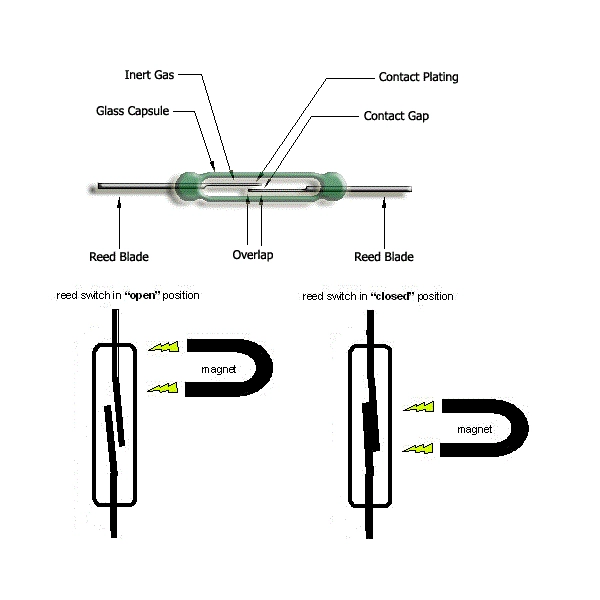
The 10 mm Reed Switch (NO, 2-Pin) is a compact, hermetically sealed electromechanical sensor designed for low-voltage and low-current signal switching. Inside the glass capsule are two ferromagnetic reeds that close when exposed to a magnetic field and open again when the field is removed. Ideal for Arduino, Raspberry Pi, and other microcontroller-based projects, as well as industrial sensing and automation applications.
How It Works ⚙️
When a magnet approaches the switch, the contacts close, completing the circuit (Normally Open operation). When the magnet moves away, the contacts open again. This simple magnetic actuation provides excellent electrical isolation and reliable switching even in harsh or dusty environments.
Key Features ✨
- Magnetic actuation: Closes the circuit when a magnet is near; opens when removed.
- Form A (NO) contact: Default open, closes under magnetic influence. Other reed types include NC and SPDT.
- Hermetically sealed: Glass capsule protects contacts from dust, moisture, and contaminants.
- Compact 10 mm body: Lightweight and easy to integrate into custom modules and enclosures.
- Fast response: Millisecond-level switching for proximity or speed sensing.
Technical Specifications ⚡
- Type: Reed switch, Normally Open (NO), 2-pin axial leads
- Typical operating voltage/current: 5–12 V DC, maximum 0.5 A (depending on application)
- Operating temperature: −40°C to +125°C
- Response time: Milliseconds
- Body length: Approximately 10 mm (glass capsule)
 Note: Ratings may vary by manufacturer. Always verify maximum contact voltage/current and use proper protection such as flyback diodes for inductive loads.
Applications 🚪⚙️🚗
- Sensor systems: Door/window sensors, bicycle speedometers, proximity detectors
- Electronics: Appliances, medical devices, keyboards, and general electronic components
- Automotive: Door, hood, and seatbelt position detection
- Industrial automation: Position and motion sensing on machinery
- Maker projects: Arduino / Raspberry Pi GPIO inputs and DIY electronics
Advantages ✅
- Electrical isolation: Hermetically sealed glass body ensures long-term reliability
- Low power: No coil power required — purely magnetically actuated
- Durable: Minimal contact wear, excellent longevity
- Fast switching: Millisecond response ideal for real-time sensing
Limitations ⚠️
- Magnetic interference: Strong or nearby magnets may cause unintended activation
- Fragile body: Handle carefully; protect with heatshrink tubing if needed
- Limited current capacity: Not suitable for high loads; use with a transistor or relay if needed
Example: Arduino LED Indicator 💡
int reedPin = 2; // Pin connected to the reed switch int ledPin = 13; // LED pin void setup() { pinMode(reedPin, INPUT_PULLUP); // Use internal pull-up resistor pinMode(ledPin, OUTPUT); } void loop() { int active = (digitalRead(reedPin) == LOW); // LOW when magnet closes switch digitalWrite(ledPin, active ? HIGH : LOW); // LED ON when magnet is near } Design Tips 🧰
- Position the magnet consistently for repeatable triggering distance.
- Use debounce code or filtering for noisy environments.
- Add a flyback diode when switching inductive loads like relays or motors.
- Use a series resistor or transistor driver for higher currents.
The 10 mm Reed Switch (Normally Open, 2-Pin) offers compact size, high reliability, and easy integration in low-voltage systems. It’s an essential magnetic sensor for Arduino, Raspberry Pi, and other microcontroller-based projects, providing dependable operation in both consumer and industrial electronics.Thanks to its hermetically sealed design and fast magnetic response, this reed switch is widely used in door sensors, automation systems, and DIY electronics projects. It delivers stable, contact-reliable performance for compact low-voltage designs.